The Foundation of Facial Massage
Lymph, Fascia & Muscle Mastery for Estheticians
Date Options
August 24
Time
9:00 AM – 4:00 PM (7 CE Hours)
Location
Gretna, Nebraska
Course Overview
Most estheticians learn facial massage techniques in school, but very few are taught why those techniques work or how to work with the different tissue systems of the face.
This hands-on continuing education course focuses on the fundamental anatomy and techniques every esthetician should understand to deliver more effective, results-driven facial treatments.
In this course, students will learn how to work with the three primary systems that influence the health and appearance of the face:
• The lymphatic system
• The fascial system
• The muscular system
Each system plays a different role in circulation, tension patterns, fluid movement, and facial appearance. Understanding how these systems function — and how to approach each one appropriately — allows estheticians to perform facial massage techniques that are both relaxing and therapeutically effective.
Students will learn how to differentiate lymphatic drainage techniques, fascial techniques, and muscular massage techniques, and how to incorporate them intentionally into facial treatments.
This course also includes scalp, neck, décolleté, and arm massage techniques to help estheticians create more complete and luxurious facial experiences for their clients.
In addition to hands-on technique training, we will also discuss how to grow your esthetics business, how to stand out in a competitive market, and how to educate clients about skincare ingredients rather than simply recommending products.
Students will also learn how to incorporate gua sha tools as a supportive technique to enhance circulation, lymphatic movement, and overall treatment results.
This course blends clinical anatomy education, hands-on technique training, and real-world spa experience from Meghann Lawrence, a massage therapist and educator with over 25 years of experience working in luxury spas and wellness centers across the United States.
Students will leave with a deeper understanding of facial anatomy, improved massage techniques, and practical strategies to elevate their facial treatments.
What You Will Learn
Students will learn:
• The structure and function of the lymphatic system of the head and neck
• How lymphatic drainage influences puffiness, congestion, and skin health
• The role of fascia in circulation, tension patterns, and tissue mobility
• How fascial restrictions can impact the appearance and health of the face
• The primary facial and neck muscles estheticians should understand
• How muscular tension contributes to facial patterns and expression lines
• How to differentiate lymphatic drainage, fascial work, and muscular massage techniques
• Facial, neck, and scalp massage techniques
• How to incorporate décolleté and arm massage into facial treatments
• Safe and effective use of gua sha tools during facials
• How improved circulation supports product absorption and skin vitality
Facial Contraindications & Safety
Understanding contraindications is essential for providing safe and professional facial treatments.
This course will cover modifications for:
• Active acne and inflamed skin conditions
• Rosacea and vascular sensitivity
• Post injectable treatments (Botox and dermal fillers)
• Lymphatic disorders and compromised drainage
• Thyroid conditions and neck precautions
• Active inflammation or infection
Students will learn how to modify techniques appropriately while still providing effective treatments.
Treatment Flow & Facial Protocol Design
Students will also learn how to structure facial massage into a clear treatment flow rather than performing disconnected techniques.
Example facial massage structure:
Lymphatic preparation to encourage drainage and reduce congestion
Neck release techniques to improve circulation and reduce tension
Muscular massage techniques to address tension patterns
Fascial techniques to improve tissue mobility and circulation
Gua sha finishing techniques to support lymphatic movement and sculpting
This structured approach allows estheticians to perform treatments that feel intentional, professional, and results-driven.
Extensive Hands-On Training
This course includes extensive hands-on practice, allowing students to confidently perform the techniques they learn.
Students will practice:
• Facial massage techniques
• Neck massage techniques
• Scalp massage
• Décolleté massage
• Arm massage additions to facial services
• Gua sha techniques
Hands-on practice ensures students leave the course with practical skills they can immediately incorporate into their treatments.
Business & Professional Development
In addition to anatomy and technique training, this course also includes discussion on growing your esthetics business.
Topics include:
• Why massage can be the most memorable part of a facial
• How therapeutic touch improves client retention
• Standing out in a competitive esthetics market
• Networking within the beauty and wellness industry
• Educating clients on ingredients rather than just recommending products
• How ingredient education builds trust and increases retail sales
• Incorporating facial tools such as gua sha into both services and retail offerings
Who This Course Is For
This course is designed for:
• Licensed estheticians
• Spa professionals looking to improve their facial massage techniques
• Estheticians who want a deeper understanding of facial anatomy
• Professionals interested in creating more therapeutic and results-driven facials
Course Format
This is a 7-hour continuing education course that includes:
• Lecture and anatomical education
• Demonstration of techniques
• Extensive hands-on practice
Students will both perform and receive techniques during the course.
Instructor
Meghann Lawrence
Meghann Lawrence has worked in the health and wellness industry since 1999 and has trained extensively in massage therapy, therapeutic bodywork, and facial techniques. Her career includes working in luxury spas across the United States, including Sedona, Seattle, and Napa Valley.
Her teaching approach focuses on helping practitioners understand the anatomy and science behind techniques, allowing them to deliver more effective and meaningful treatments for their clients.
Cupping Therapy for Massage Therapists
Work Smarter. Protect Your Body. Get Better Results.
Are you ready to make your life as a massage therapist just a little bit easier?
Most of us are — and cupping therapy is one of the most effective tools to do exactly that.
Cupping works in a way manual pressure alone cannot. By creating negative pressure, cupping gently lifts the skin, fascia, and underlying tissue, giving muscles a moment to decompress, rehydrate, and reset. This brief pause allows the tissue to soften and respond, making it easier for you to access deeper layers without forcing or overworking your hands and body.
The result?
More effective therapeutic work, less strain on you, and noticeable changes in your clients’ bodies.
What You’ll Learn
This course includes comprehensive instruction in Silicone, Kangzhu, and Fire Cupping, with a strong emphasis on safe application, clinical reasoning, and real-world integration into massage sessions.
You will learn cupping techniques for:
Back and spine
Legs and hips
Arms and shoulders
Pectorals
Abdomen
And additional adaptable areas for full-body application
Beyond musculoskeletal work, this course also covers the lymphatic benefits of cupping therapy. You’ll learn how to use cupping as a gentle yet effective lymphatic treatment to support detoxification, reduce stagnation, and enhance overall tissue health.
This is not just about “getting deeper.” It’s about working smarter, more efficiently, and with intention.
About Your Instructor
This course is taught by Meghann Lawrence, a massage therapist and educator with over 25 years of experience in the massage and wellness industry. Meghann has worked in luxury resorts, destination spas, and clinical settings across the U.S., and has spent decades studying, practicing, and teaching advanced bodywork modalities.
Her teaching style is practical, anatomy-driven, and deeply rooted in hands-on experience. Meghann focuses on techniques that support therapist longevity, client results, and confidence in the treatment room — because she’s been there, done the work, and understands what actually holds up over time.
Small Class Size. Real Support. Lasting Skills.
Class sizes are intentionally kept small to ensure individualized instruction, hands-on guidance, and one-on-one support throughout the course. Our goal is simple:
You leave feeling confident, capable, and ready to begin using cupping therapy in your practice immediately.
This course is ideal for massage therapists looking to:
Reduce strain on their hands and body
Expand their therapeutic toolbox
Improve client outcomes
Add a highly effective modality that integrates seamlessly into existing sessions
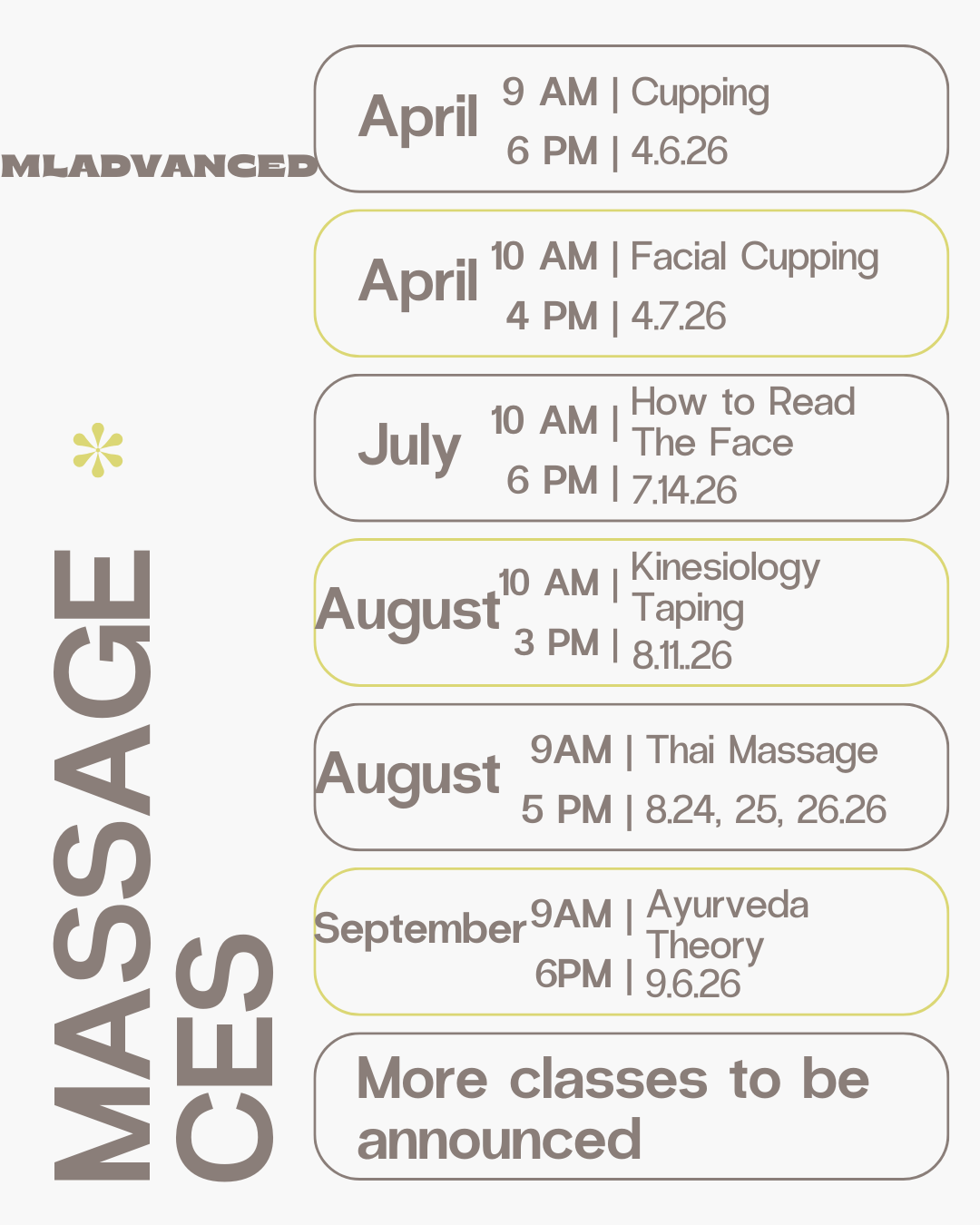
April 6, 2026
9am - 7pm
Location- Lincoln, NE
Emotional Intelligence, TCM & the Stories the Face Tells 7 CEs
The face holds an extraordinary amount of information — about the body, the nervous system, emotional patterns, and how a person moves through the world. Long before someone tells you what’s going on, their face often already has.
This course explores facial reading as a tool for emotional intelligence, clinical awareness, and compassionate care. Drawing from Traditional Chinese Medicine (TCM) and 5-Element Theory, you’ll learn how facial features, color, texture, lines, and expression can offer insight into internal organ systems, emotional tendencies, and long-held patterns.
This is not about diagnosis or judgment — it’s about seeing more clearly, listening more deeply, and working more effectively with the whole person in front of you.
What You’ll Learn
In this course, we will explore how the face reflects both physiology and emotional experience, and how that information can support your work as a therapist, practitioner, or caregiver.
You will learn:
The foundations of facial reading through TCM and 5-Element Theory
How different areas of the face relate to internal organ systems
Emotional patterns commonly associated with each element
How stress, trauma, and life experience show up in the face over time
What facial color, tone, texture, and expression can indicate
How to observe without labeling or diagnosing
How to use facial awareness to improve communication and client care
This course is especially valuable for those who work hands-on with people and want to deepen empathy, presence, and intuitive intelligence in their practice.
Why Facial Reading?
Understanding how to read the face helps you:
Improve emotional intelligence and client communication
Recognize stress patterns and nervous system states
Tailor treatments more thoughtfully and effectively
Meet clients with greater compassion and awareness
Strengthen trust and therapeutic rapport
This knowledge supports better care — not just better techniques.
About Your Instructor
This course is taught by Meghann Lawrence, a massage therapist and educator with over 25 years of experience in the massage and wellness industry. Meghann has studied and worked extensively with TCM principles, 5-Element theory, and integrative bodywork, weaving emotional awareness and energetic understanding into hands-on care.
Her background includes decades in luxury resort spas, clinical settings, and advanced continuing education. Meghann’s teaching style blends anatomy, energetic awareness, intuition, and real-world experience, helping students see clients more fully — beyond symptoms alone.
Students value her grounded approach, clear explanations, and ability to make complex concepts approachable and practical.
Small Group Learning. Meaningful Conversation.
Class size is intentionally kept small to allow for:
Thoughtful discussion and questions
Observation and shared learning
A safe, respectful space to explore emotional awareness
This is a course for practitioners who want to understand people more deeply, not rush through material.
This class is ideal for massage therapists, bodyworkers, wellness practitioners, and caregivers who want to expand their understanding of the emotional and energetic layers of healing.
July 14, 2026
10 am - 5 pm
$300
Lincoln, NE
Facial Cupping & Lymphatic Drainage 6 CEs
Advanced Techniques for the Face, Neck & Décolleté
April 7, 2026 | 10:00 AM – 4:00 PM
Lincoln, Nebraska
Facial cupping is one of the most effective — and misunderstood — tools in facial massage. When done correctly, it supports lymphatic drainage, improves circulation, softens fascial restrictions, and enhances the results of both therapeutic and esthetic facial work. When done incorrectly, it can overwhelm delicate tissue.
This course is designed to teach you how to use facial cupping intentionally, safely, and effectively, with a strong focus on lymphatic health and tissue integrity.
What You’ll Learn
In this hands-on course, you will learn Meghann Lawrence’s complete facial cupping treatment, including how to integrate it seamlessly into facial massage, esthetic treatments, or standalone sessions.
Course content includes:
Meghann’s full facial cupping protocol
Facial and cervical lymphatic drainage techniques
Cup selection, pressure control, and pacing
Proper sequencing for face, neck, and décolleté
Indications and contraindications
Cautions for sensitive, aging, inflamed, or compromised skin
How to avoid common mistakes that lead to bruising or tissue stress
How to adapt the treatment for different client needs
This course emphasizes gentle, effective work that supports the nervous system and lymphatic flow — not aggressive techniques that compromise the skin barrier.
Why Facial Cupping?
Facial cupping:
Encourages lymphatic drainage and fluid movement
Supports healthy circulation and tissue oxygenation
Helps release fascial restrictions in the face and jaw
Can reduce puffiness and stagnation
Enhances the results of facial massage and skin treatments
This is not about “lifting harder.” It’s about understanding anatomy, pressure, and flow — and working with the body, not against it.
About Your Instructor
This course is taught by Meghann Lawrence, a massage therapist and educator with over 25 years of experience in the massage and wellness industry. Meghann has worked in luxury resorts, destination spas, and clinical settings across the United States, and has spent decades studying facial massage, lymphatic work, and advanced bodywork modalities.
Her approach blends anatomy, intuition, and real-world application. Meghann teaches techniques that are not only effective for clients, but also sustainable for the practitioner, supporting longevity in both hands-on work and career health.
Students appreciate her clear instruction, hands-on guidance, and ability to explain why techniques work — not just how to perform them.
Small Class Size. Hands-On Learning.
Class size is intentionally limited to ensure:
Individualized instruction
Hands-on practice with guidance and correction
Time for questions and clinical discussion
Our goal is for you to leave feeling confident, informed, and ready to safely use facial cupping in your practice immediately.
Course Details
Date: April 7, 2026
Time: 10:00 AM – 4:00 PM
Location: Lincoln, Nebraska
This course is ideal for massage therapists and estheticians looking to expand their facial work with safe, effective, and lymphatically informed techniques.
The Foundation of Facial Massage
Lymph, Fascia & Muscle Mastery for Estheticians
Date Options
August 25
Time
9:00 AM – 4:00 PM (7 CE Hours)
Location
Lincoln, Nebraska
Emerald Healing Arts & Apothecary
Course Overview
Most estheticians learn facial massage techniques in school, but very few are taught why those techniques work or how to work with the different tissue systems of the face.
This hands-on continuing education course focuses on the fundamental anatomy and techniques every esthetician should understand to deliver more effective, results-driven facial treatments.
In this course, students will learn how to work with the three primary systems that influence the health and appearance of the face:
• The lymphatic system
• The fascial system
• The muscular system
Each system plays a different role in circulation, tension patterns, fluid movement, and facial appearance. Understanding how these systems function — and how to approach each one appropriately — allows estheticians to perform facial massage techniques that are both relaxing and therapeutically effective.
Students will learn how to differentiate lymphatic drainage techniques, fascial techniques, and muscular massage techniques, and how to incorporate them intentionally into facial treatments.
This course also includes scalp, neck, décolleté, and arm massage techniques to help estheticians create more complete and luxurious facial experiences for their clients.
In addition to hands-on technique training, we will also discuss how to grow your esthetics business, how to stand out in a competitive market, and how to educate clients about skincare ingredients rather than simply recommending products.
Students will also learn how to incorporate gua sha tools as a supportive technique to enhance circulation, lymphatic movement, and overall treatment results.
This course blends clinical anatomy education, hands-on technique training, and real-world spa experience from Meghann Lawrence, a massage therapist and educator with over 25 years of experience working in luxury spas and wellness centers across the United States.
Students will leave with a deeper understanding of facial anatomy, improved massage techniques, and practical strategies to elevate their facial treatments.
What You Will Learn
Students will learn:
• The structure and function of the lymphatic system of the head and neck
• How lymphatic drainage influences puffiness, congestion, and skin health
• The role of fascia in circulation, tension patterns, and tissue mobility
• How fascial restrictions can impact the appearance and health of the face
• The primary facial and neck muscles estheticians should understand
• How muscular tension contributes to facial patterns and expression lines
• How to differentiate lymphatic drainage, fascial work, and muscular massage techniques
• Facial, neck, and scalp massage techniques
• How to incorporate décolleté and arm massage into facial treatments
• Safe and effective use of gua sha tools during facials
• How improved circulation supports product absorption and skin vitality
Facial Contraindications & Safety
Understanding contraindications is essential for providing safe and professional facial treatments.
This course will cover modifications for:
• Active acne and inflamed skin conditions
• Rosacea and vascular sensitivity
• Post injectable treatments (Botox and dermal fillers)
• Lymphatic disorders and compromised drainage
• Thyroid conditions and neck precautions
• Active inflammation or infection
Students will learn how to modify techniques appropriately while still providing effective treatments.
Treatment Flow & Facial Protocol Design
Students will also learn how to structure facial massage into a clear treatment flow rather than performing disconnected techniques.
Example facial massage structure:
Lymphatic preparation to encourage drainage and reduce congestion
Neck release techniques to improve circulation and reduce tension
Muscular massage techniques to address tension patterns
Fascial techniques to improve tissue mobility and circulation
Gua sha finishing techniques to support lymphatic movement and sculpting
This structured approach allows estheticians to perform treatments that feel intentional, professional, and results-driven.
Extensive Hands-On Training
This course includes extensive hands-on practice, allowing students to confidently perform the techniques they learn.
Students will practice:
• Facial massage techniques
• Neck massage techniques
• Scalp massage
• Décolleté massage
• Arm massage additions to facial services
• Gua sha techniques
Hands-on practice ensures students leave the course with practical skills they can immediately incorporate into their treatments.
Business & Professional Development
In addition to anatomy and technique training, this course also includes discussion on growing your esthetics business.
Topics include:
• Why massage can be the most memorable part of a facial
• How therapeutic touch improves client retention
• Standing out in a competitive esthetics market
• Networking within the beauty and wellness industry
• Educating clients on ingredients rather than just recommending products
• How ingredient education builds trust and increases retail sales
• Incorporating facial tools such as gua sha into both services and retail offerings
Who This Course Is For
This course is designed for:
• Licensed estheticians
• Spa professionals looking to improve their facial massage techniques
• Estheticians who want a deeper understanding of facial anatomy
• Professionals interested in creating more therapeutic and results-driven facials
Course Format
This is a 7-hour continuing education course that includes:
• Lecture and anatomical education
• Demonstration of techniques
• Extensive hands-on practice
Students will both perform and receive techniques during the course.
Instructor
Meghann Lawrence
Meghann Lawrence has worked in the health and wellness industry since 1999 and has trained extensively in massage therapy, therapeutic bodywork, and facial techniques. Her career includes working in luxury spas across the United States, including Sedona, Seattle, and Napa Valley.
Her teaching approach focuses on helping practitioners understand the anatomy and science behind techniques, allowing them to deliver more effective and meaningful treatments for their clients.
Full-Body Thai Massage with Table Thai Adaptations
August 24–26, 2026
Lincoln, Nebraska
Investment: $650
Traditional Thai Massage is often described as assisted yoga, but in practice it is far more than that. It is a complete therapeutic system that blends rhythmic compression, assisted stretching, energy line work, breath awareness, and mindful presence.
This immersive three-day course teaches a full-body Traditional Thai Massage sequence, with table Thai options for most movements, making the work adaptable, accessible, and sustainable in modern practice settings.
Whether you work on the floor, the table, or both, this course is designed to help you move with confidence, ease, and intention — while protecting your body and deepening client outcomes.
What You’ll Learn
This is a comprehensive, hands-on training covering a full Traditional Thai Massage treatment from beginning to end.
You will learn:
A complete full-body Thai Massage sequence
Floor-based Thai Massage techniques
Table Thai adaptations for most movement
Proper body mechanics to protect the practitioner
Rhythmic compression and assisted stretching
Flow, transitions, and pacing
How to adapt Thai Massage for different bodies and abilities
How to integrate Thai Massage into an existing massage practice
This course emphasizes working with your whole body, not just your hands — making it ideal for therapist longevity and sustainable practice.
Why Traditional Thai Massage?
Traditional Thai Massage:
Reduces physical strain on the therapist
Encourages joint mobility and flexibility
Supports nervous system regulation
Enhances circulation and energy flow
Creates profound, long-lasting changes in the body
When adapted thoughtfully, Thai Massage can be seamlessly integrated into clinical massage, spa work, and therapeutic sessions — even in settings where floor work isn’t possible.
About Your Instructor
This course is taught by Meghann Lawrence, a massage therapist and educator with over 25 years of experience in the massage and wellness industry.
Meghann first studied Traditional Thai Massage in Northern California, where she was introduced to the foundations of the practice and its emphasis on movement, breath, and practitioner awareness. She later spent one month studying in Northern Thailand, deepening her understanding of Traditional Thai Massage as both a therapeutic system and a cultural practice.
Her teaching blends traditional principles with real-world application, offering clear instruction, thoughtful pacing, and practical adaptations that work in modern treatment rooms. Meghann is deeply committed to techniques that support therapist longevity, body intelligence, and respectful, effective care.
Students appreciate her grounded presence, hands-on guidance, and ability to teach complex movement in a way that feels approachable and embodied.
Small Group Learning. Full Immersion.
Class size is intentionally limited to allow for:
Extensive hands-on practice
Individual instruction and correction
Safe, supported learning of complex movements
Time to integrate flow and transitions
This is a physically engaging course taught at a sustainable pace, with breaks and guidance to support learning and integration.
Course Details
Dates: August 24–26, 2026
Location: Lincoln, Nebraska
Investment: $650
This course is ideal for massage therapists and bodyworkers who want to expand their skill set with a time-honored modality that supports both client transformation and practitioner longevity.
Practical Applications for Therapists, Clinicians & Active Bodies
August 11, 2026 | 10:00 AM – 3:00 PM
Lincoln, Nebraska
Tuition: $250
Kinesiology taping is one of the most versatile, effective, and underutilized tools in modern bodywork and rehabilitation. When applied correctly, it can support joints, reduce pain and inflammation, improve proprioception, and extend the benefits of hands-on treatment long after a session ends.
This course is designed to teach clear, practical, real-world taping techniques you can confidently use with clients, patients, athletes, and family members — without overcomplication or gimmicks.
Who This Course Is For
This class is ideal for:
Massage therapists
Physical therapists and PTAs
Chiropractors
Bodyworkers and movement professionals
Parents and families with active children and athletes
No prior taping experience is required.
What You’ll Learn
This is a hands-on, technique-focused course covering kinesiology taping applications for all major body areas and common injury patterns.
You will learn taping techniques for:
Neck and shoulders
Back and spine
Hips and pelvis
Knees and ankles
Feet and plantar fascia
Elbows, wrists, and hands
Common clinical and athletic applications include:
Muscle support and inhibition
Joint stabilization
Overuse injuries
Acute and chronic pain patterns
Swelling and inflammation support
Postural and movement awareness
You’ll also learn:
Tape selection and preparation
Proper skin prep and removal
Tension vs. no-tension applications
Indications and contraindications
How to combine taping with massage and manual therapy for better outcomes
This course focuses on functional taping that makes sense, not complicated patterns you’ll never use again.
Why Kinesiology Taping?
Kinesiology taping allows you to:
Extend the benefits of hands-on work
Offer clients continued support between sessions
Reduce strain on the therapist’s body
Support healing without restricting movement
Empower athletes and families with practical tools
It’s an excellent addition to massage, rehabilitation, chiropractic care, and athletic support — and once learned, it becomes second nature.
About Your Instructor
This course is taught by Meghann Lawrence, a massage therapist and educator with over 25 years of experience in the massage and wellness industry. Meghann has worked in luxury resorts, destination spas, and clinical settings throughout the United States, and has extensive experience integrating kinesiology taping into massage, injury recovery, and movement support.
Her teaching style is practical, anatomy-driven, and rooted in real-world application. Meghann focuses on techniques that support therapist longevity, client outcomes, and confidence, ensuring students leave with skills they can immediately and safely apply.
Small Class Size. Hands-On Learning.
Class size is intentionally limited to allow for:
Hands-on practice with guidance
Individual instruction and correction
Time for questions and clinical discussion
Our goal is for you to leave feeling confident taping real bodies for real needs — not just memorizing patterns.
Course Details
Date: August 11, 2026
Time: 10:00 AM – 3:00 PM
Location: Lincoln, Nebraska
Investment: $200
This course provides practical, adaptable tools you’ll use again and again — whether in the treatment room, on the sidelines, or at home.
Doshas, Emotional Intelligence & Understanding the Whole Person
September 6, 2026 | 9:00 AM – 5:00 PM
Lincoln, Nebraska
Investment: $300
Ayurveda is one of the oldest holistic health systems in the world, offering a powerful framework for understanding the mind–body connection, emotional patterns, and individual constitution. This course provides a clear, accessible introduction to Ayurvedic theory, with a strong focus on how this wisdom supports emotional intelligence, self-awareness, and compassionate care.
This is a lecture-based course, making it ideal for those who want a deep conceptual understanding without hands-on physical work.
What You’ll Learn
In this full-day course, you will be introduced to the foundational principles of Ayurveda and how they apply to modern wellness, bodywork, and daily life.
Topics include:
An overview of Ayurvedic philosophy and origins
The three doshas — Vata, Pitta, and Kapha
Physical, emotional, and behavioral characteristics of each dosha
How doshic imbalance can show up emotionally and physically
Understanding individual constitution vs. current state
How Ayurveda supports emotional intelligence and empathy
How to apply Ayurvedic understanding when working with others
This course emphasizes observation, awareness, and understanding, not diagnosis or treatment protocols.
Why Study Ayurvedic Theory?
Ayurvedic theory helps you:
Better understand yourself and others
Recognize emotional and energetic patterns
Improve communication and relational awareness
Support nervous system regulation through understanding, not force
Add depth and context to hands-on or wellness work
Because this course is theory-based, it is well-suited for a wide range of people, including massage therapists, wellness practitioners, educators, caregivers, yoga teachers, and anyone interested in holistic health and emotional intelligence.
About Your Instructor
This course is taught by Meghann Lawrence, a massage therapist and educator with over 25 years of experience in the massage and wellness industry.
Meghann has practiced Ayurvedic-based treatments throughout her entire career, integrating Ayurvedic philosophy, doshic awareness, and emotional intelligence into hands-on work and client care. She has also trained Washington State massage schools on curriculum development, contributing to the education of future massage therapists and shaping foundational massage coursework.
Her teaching style is clear, grounded, and practical, making complex systems approachable and meaningful. Meghann is known for her ability to connect theory to real life — helping students not just learn concepts, but truly understand them.
Course Format
Lecture-based learning
Thoughtful discussion and Q&A
Ideal for multiple professions and backgrounds
No hands-on physical requirements
This course is designed to expand perspective, deepen understanding, and provide tools you’ll use far beyond the classroom.
Course Details
Date: September 6, 2026
Time: 9:00 AM – 5:00 PM
Location: Lincoln, Nebraska
Investment: $300
This course is an excellent foundation for anyone seeking a deeper understanding of human nature, emotional intelligence, and holistic health philosophy.